Virra
Product engineering and operating system design for a small music-services company.
I helped Virra turn scattered product and leadership work into a more coherent operating system while building the web application and marketing site that supported its software services.
- Problem
- Product work, client work, and leadership discussions were not reliably turning into owned decisions or follow-through.
- Role
- Product development, marketing site, web application, workspace administration, accountability systems, and operating cadence.
- Changed
- Work moved into Basecamp, AORs and DRIs became public, WBRs reviewed metrics, and improvement proposals clarified decisions.
- Proof
- Next.js app, Firebase, Firestore, Stripe, Sanity, Vercel, Google Workspace administration, RAPID proposals, and shipped mobile and desktop interfaces.
Role
I was responsible for product development, the marketing site, and the web application. I also owned important internal systems work across team software, accountability, and operating cadence.
Context
Virra was building services for independent artists while also running client work and internal software experiments. The team was having leadership meetings, but the meetings were not reliably turning into changed behavior, clear decisions, or owned follow-up.
Virra needed more than software. It needed a way to decide, assign, review, and improve the work around the software.
Web Application And Marketing Site
I built a Next.js marketing site and web application for testing new software services for independent artists and managers.
- Stack
- JavaScript, Node.js, Next.js, React, Tailwind
- Firestore, Firebase Authentication, Cloud Storage for Firebase
- Stripe, Sanity, Vercel
The marketing site replaced an existing Wix site with a Next.js site hosted on Vercel.
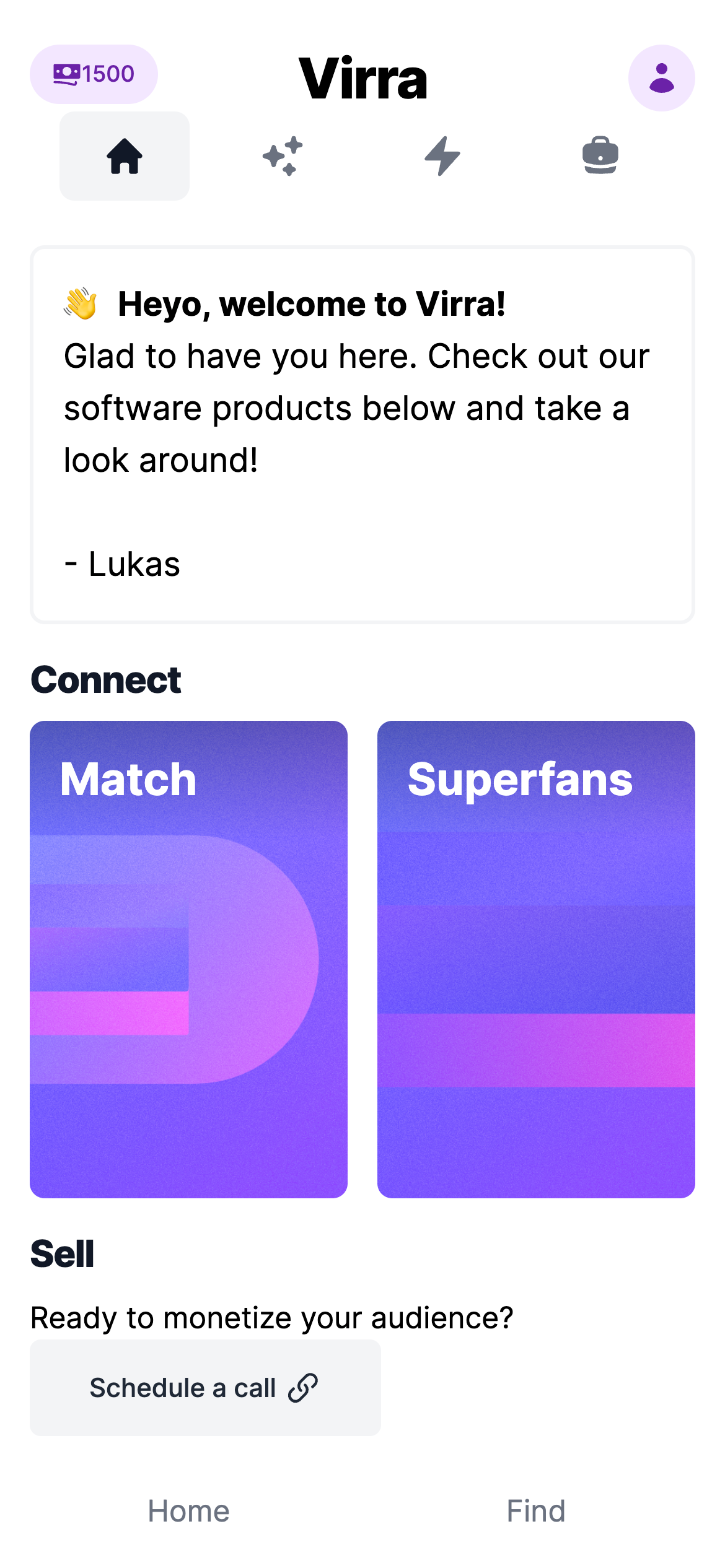
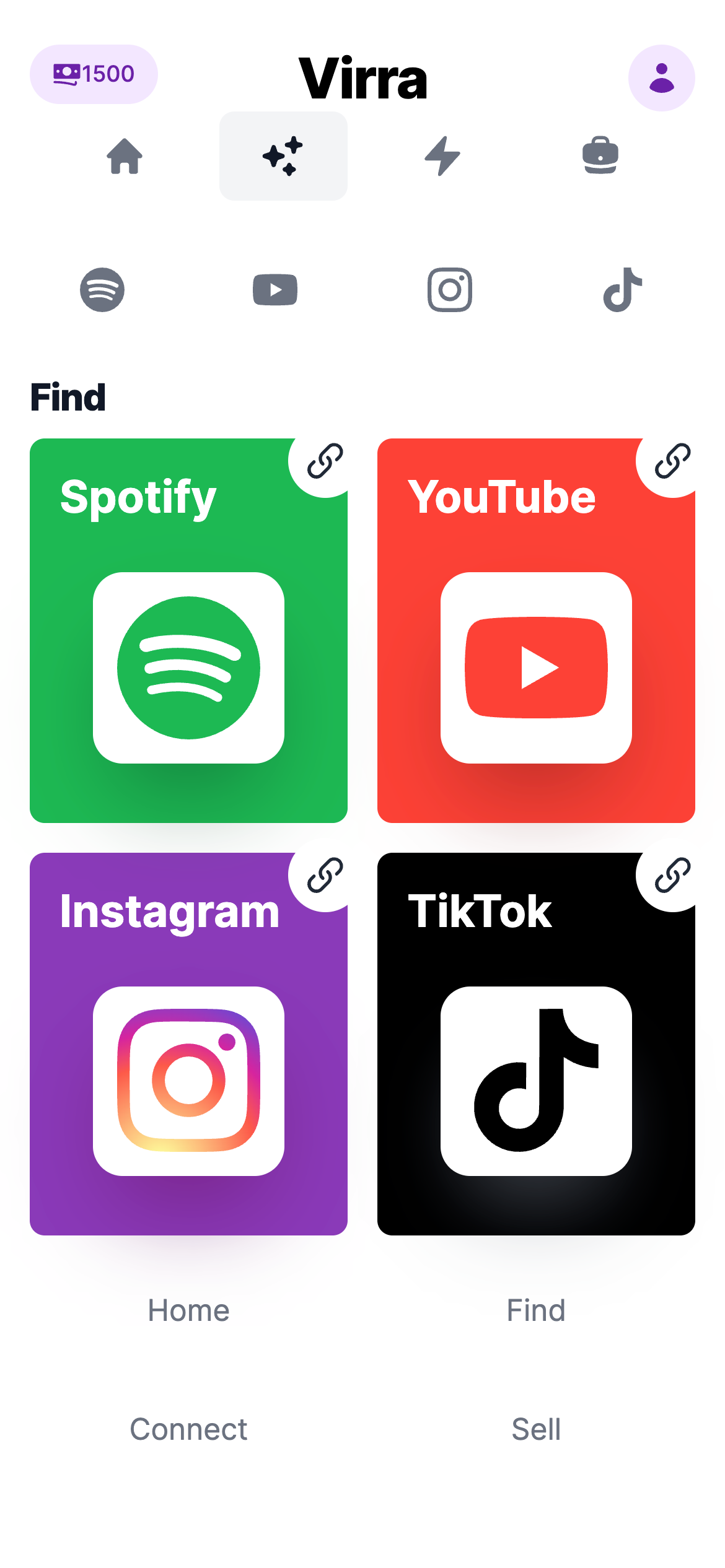
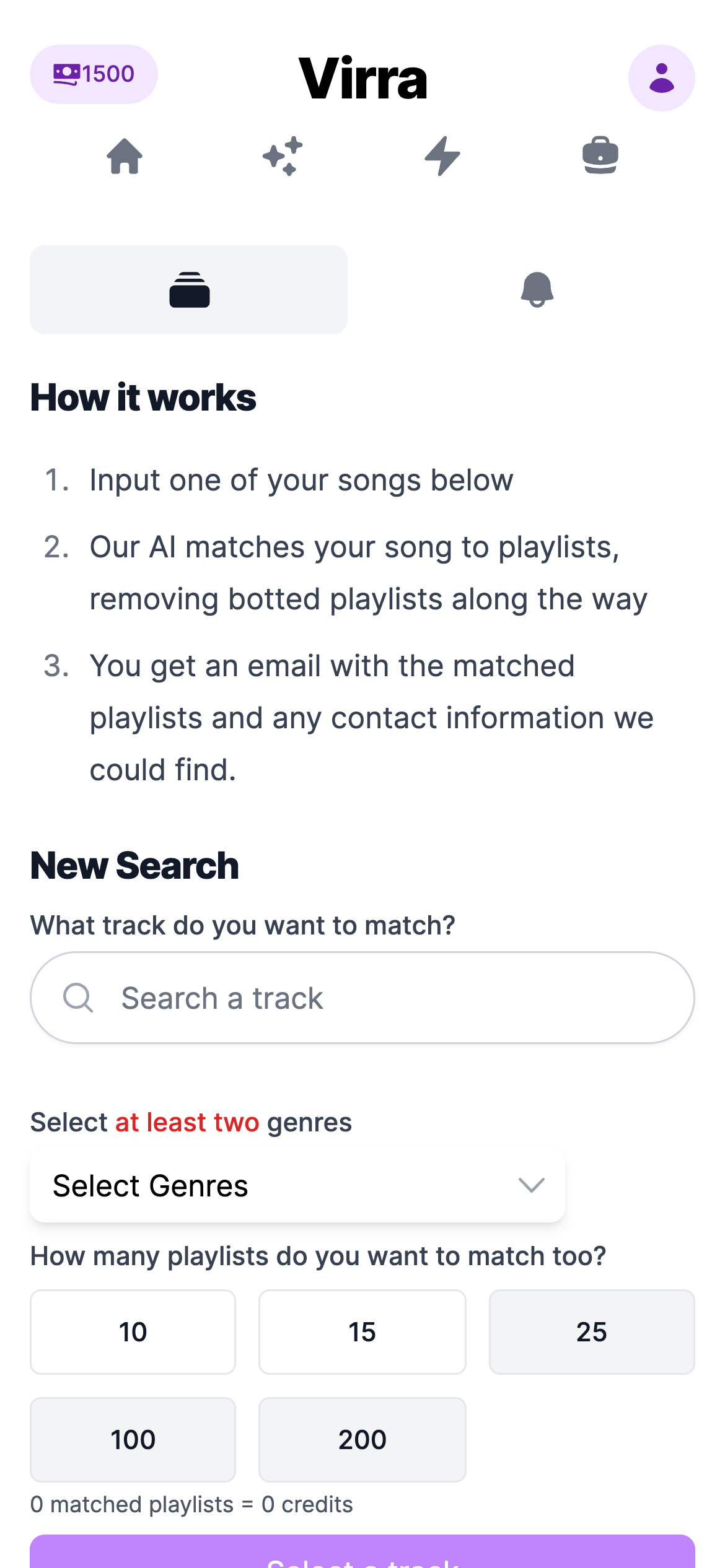
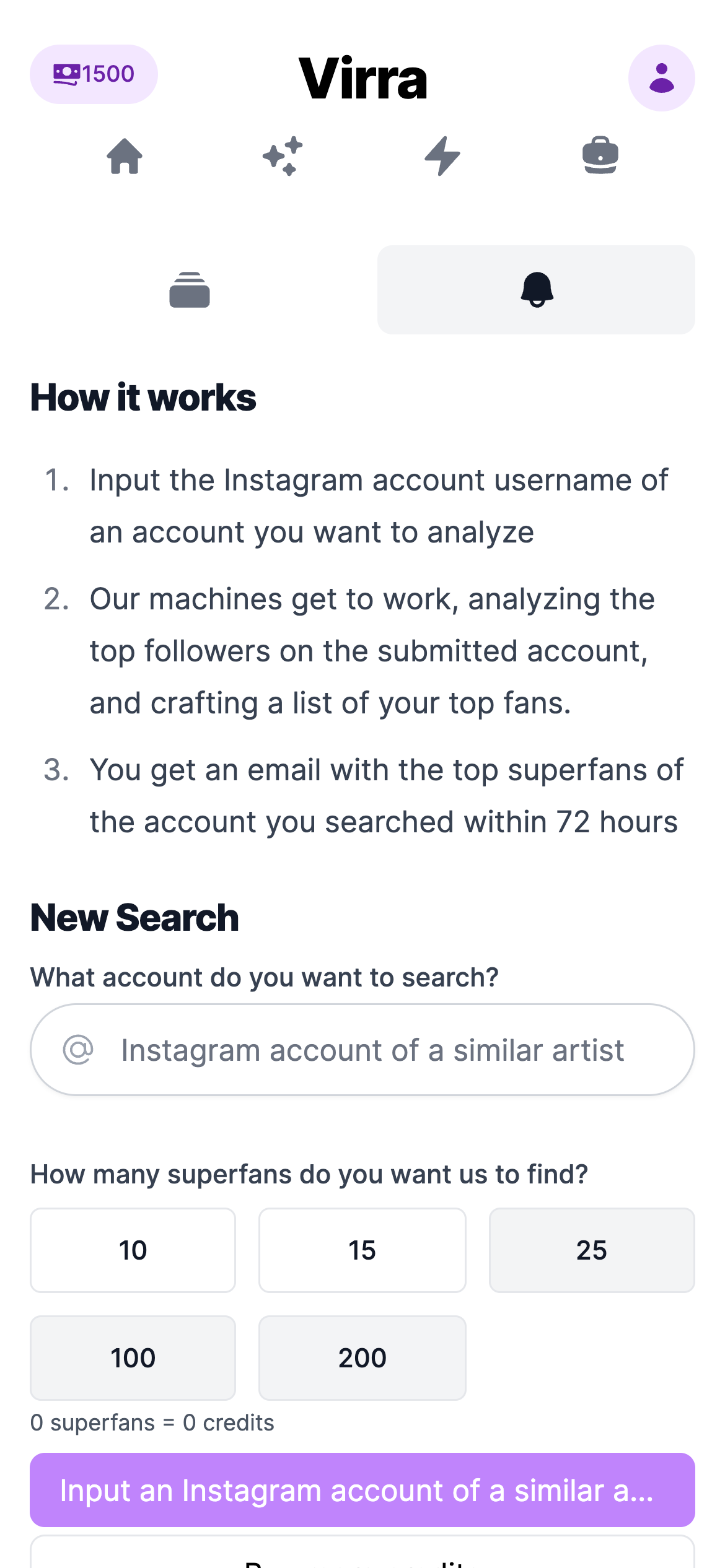
The web application housed early software services, including Virra Match and Virra Superfans. Virra Match helped artists and managers find Spotify playlists to pitch by matching a song with relevant playlists and contact information. Virra Superfans helped artists and managers identify highly engaged Instagram accounts, either from their own audience or from similar artists.
The service worked on a credit-based system and used Firebase, Firestore, Stripe, and Next.js API routes to support the application.
Interface Design
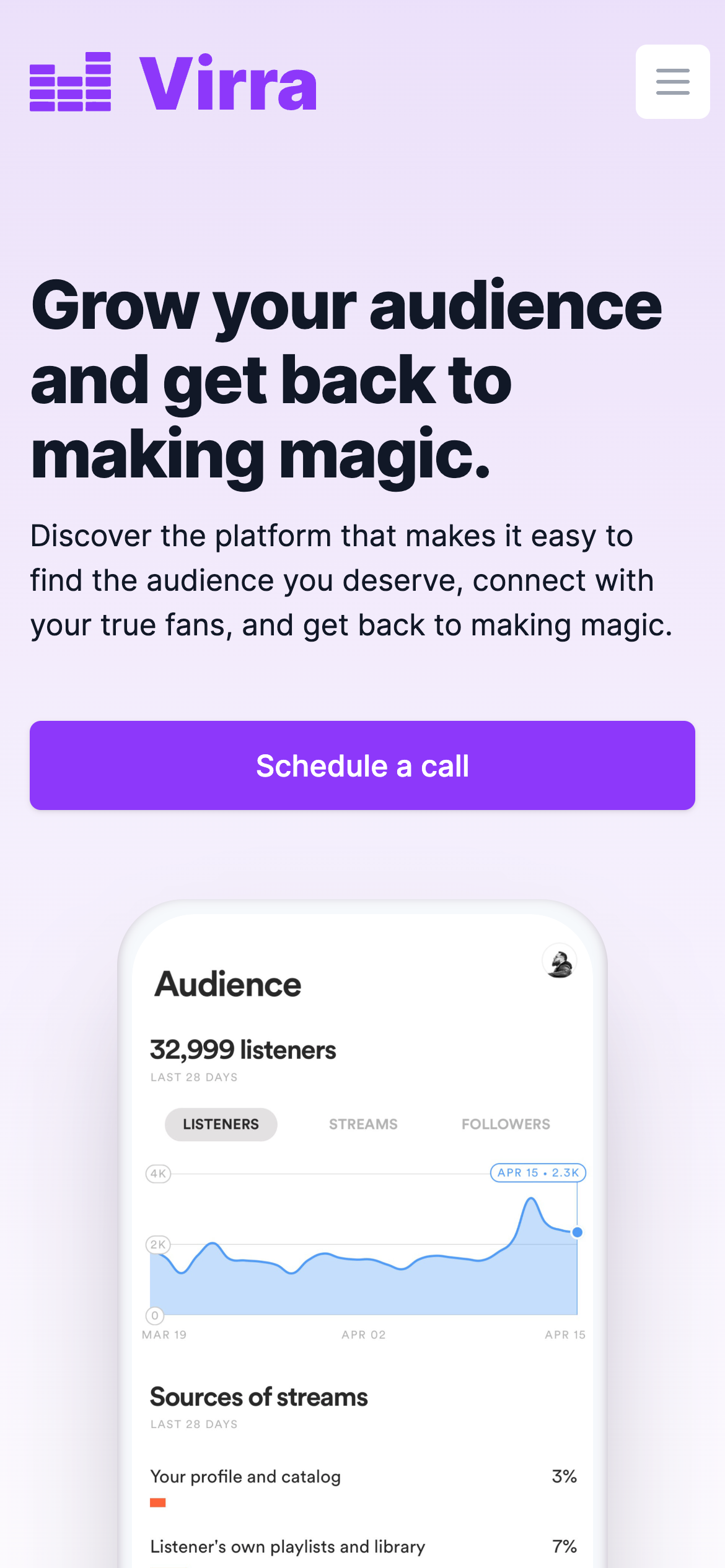
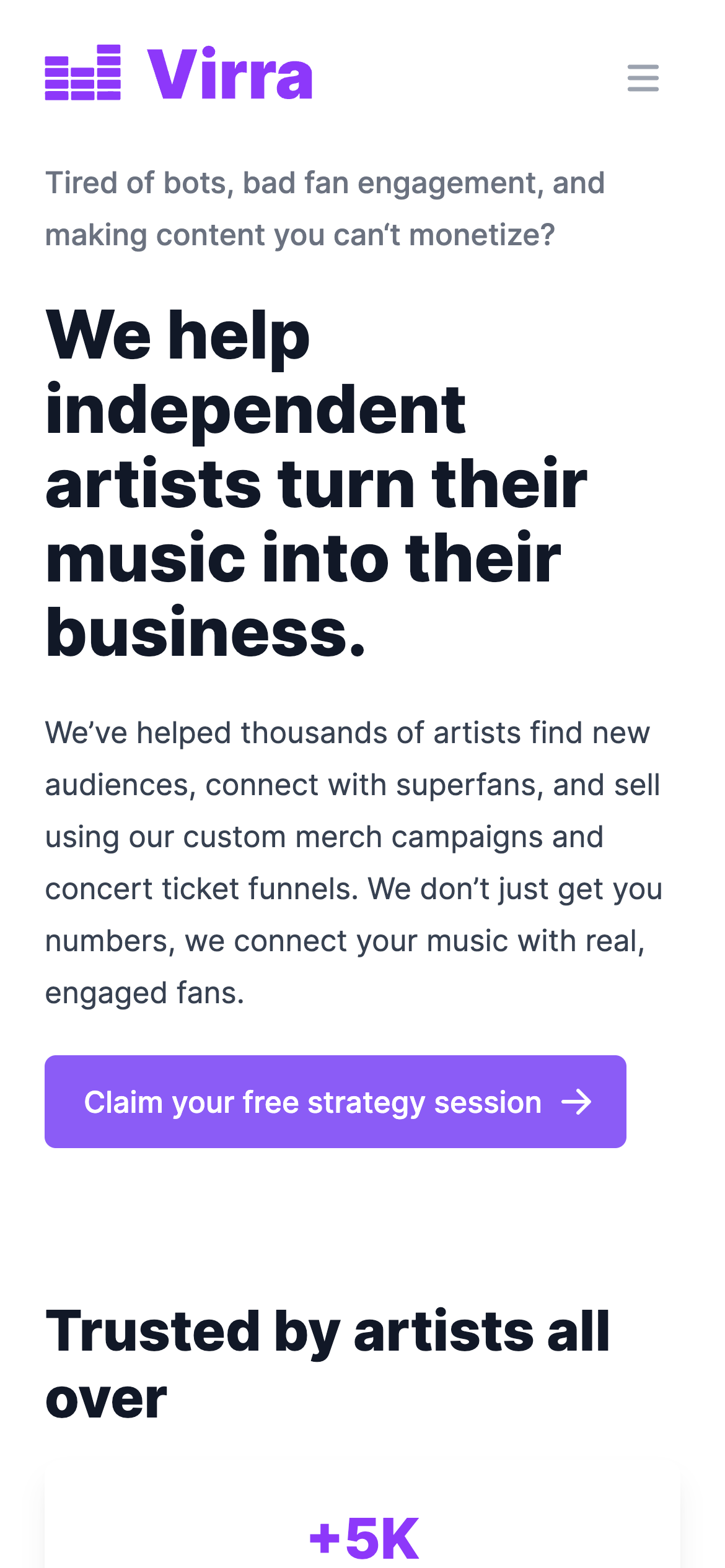
I also designed and implemented the marketing site and application interfaces across mobile and desktop views.
Marketing Site
virramarketing v1
virra.com v2
Application
Before And After
Before, decisions lived in conversation, ownership was implicit, and leadership meetings did not reliably produce change.
After, work lived in Basecamp, AORs and DRIs were public, WBRs reviewed core metrics, and improvement proposals turned issues into decisions with owners and due dates.
Basecamp And Workspace Administration
I chose Basecamp, trained the team on it, and migrated work onto it. Basecamp gave the team a shared document surface and a clearer way to manage projects outside scattered conversation.
I also managed Google Workspace, including accounts, groups, permissions, email, security, onboarding, and offboarding.
Ownership Model
I defined the company’s Areas of Responsibility and helped make AORs and Directly Responsible Individuals public throughout the company so everyone could see who was responsible for what.
This turned responsibility from something people had to infer into something the team could point to, discuss, and improve.
Weekly Business Review
I supported Weekly Business Reviews for the leadership team. The WBR focused on core business metrics, deviations from expectations, the “why” behind data changes, and refinement of the metrics through trial and error.
Improvement Proposals
I created an improvement proposal process to source improvements and clarify decision-making accountability by removing uncertainty over roles or responsibilities for a decision.
Each improvement proposal included four ingredients:
- Issue: why the status quo did not work.
- RAPID: who would recommend, agree, perform, provide input, and decide.
- Proposed Solution: a bold, directive recommendation for what to do.
- Next Steps: the decision, action items, DRIs, and due dates.
The format encouraged written questions from the decider and written responses from the recommender before a decision was published with next actions.
Result
The operating system led to genuine, useful discussions and company change. It reduced meetings that went nowhere, made decisions faster, dropped less work, clarified ownership, and improved follow-through.
At the same time, the team had a production web application and marketing site that made its software services available on the web.
What This Shows
- I can build both the product and the operating system around the product.
- I can make vague ownership explicit.
- I can turn meetings into written decisions, DRIs, and due dates.
- I can connect metrics, software, and company operations.
- I can move between product code, business process, and team operations.